Immersed in Imereti
Peter on Georgia
Back in April, Brawn & Sargasso were invited to Stamba Hotel in Tbilisi to team up with long time friends Bar Brutal for a weekend of divine cooking, drinking, singing, eating, dancing and more drinking. Once the hangovers had (mostly) subsided and the weekend long event was over we headed west to the Imereti region to visit a number of growers and people instrumental to the wine movement in Georgia and beyond.
What struck us about the wines of Imereti was the delicate nature of them and how they contrasted so much to what most of us understand Georgian wines to be: powerful tannic orange wines that shout loudly of the place they’re from.
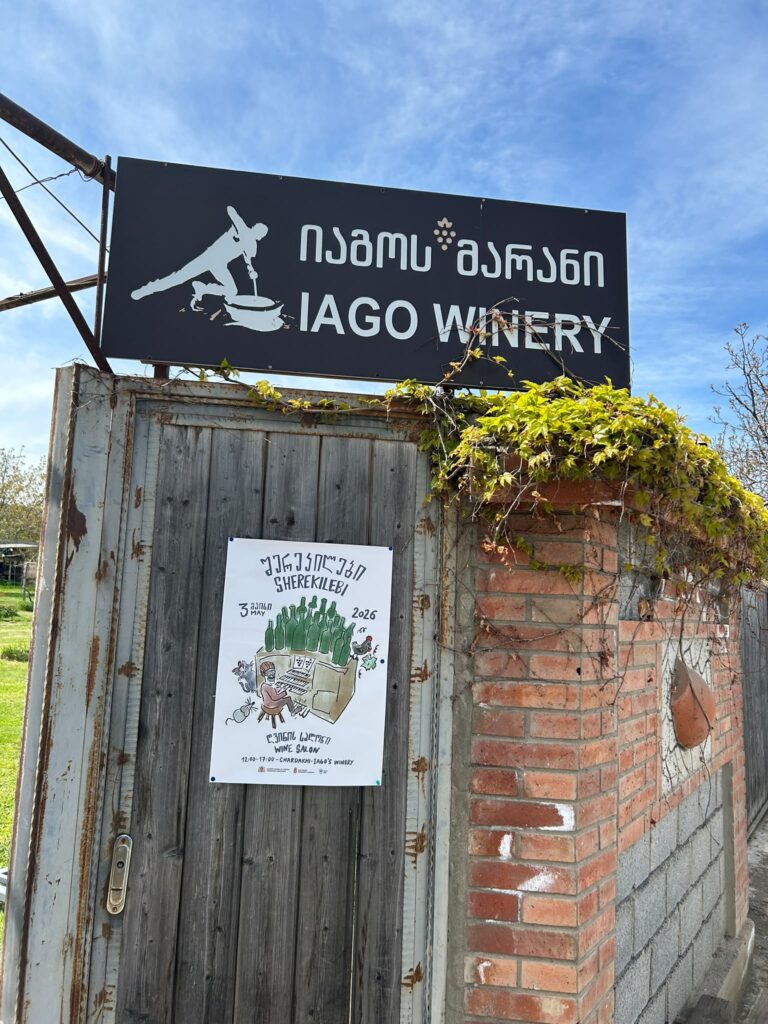
The first stop, 30km outside of Tbilisi in the Mukrani Valley, was Iago Winery, whose 2 hectare vineyard is planted solely with the thick-skinned Chinuri grape. We were lucky enough to taste wines pressed directly which were super lean, mineral & orchard-fruited, in contrast to others that had been macerated for 6-7 months and took on a whole other dimension, similar to their Friulian counterparts.
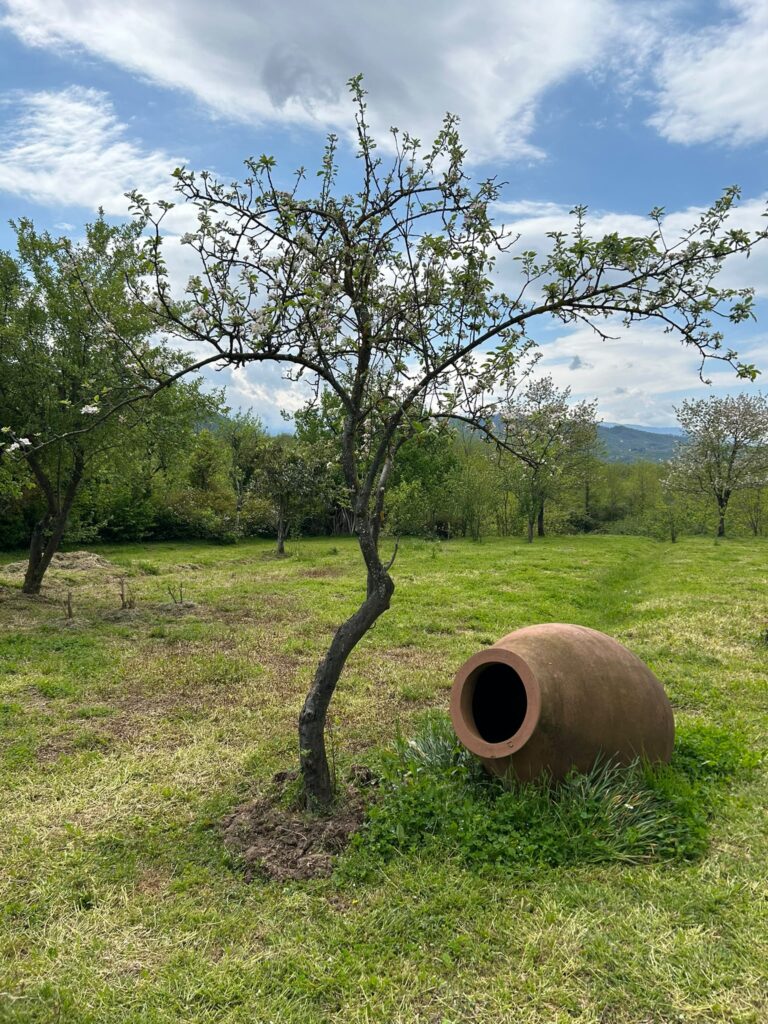
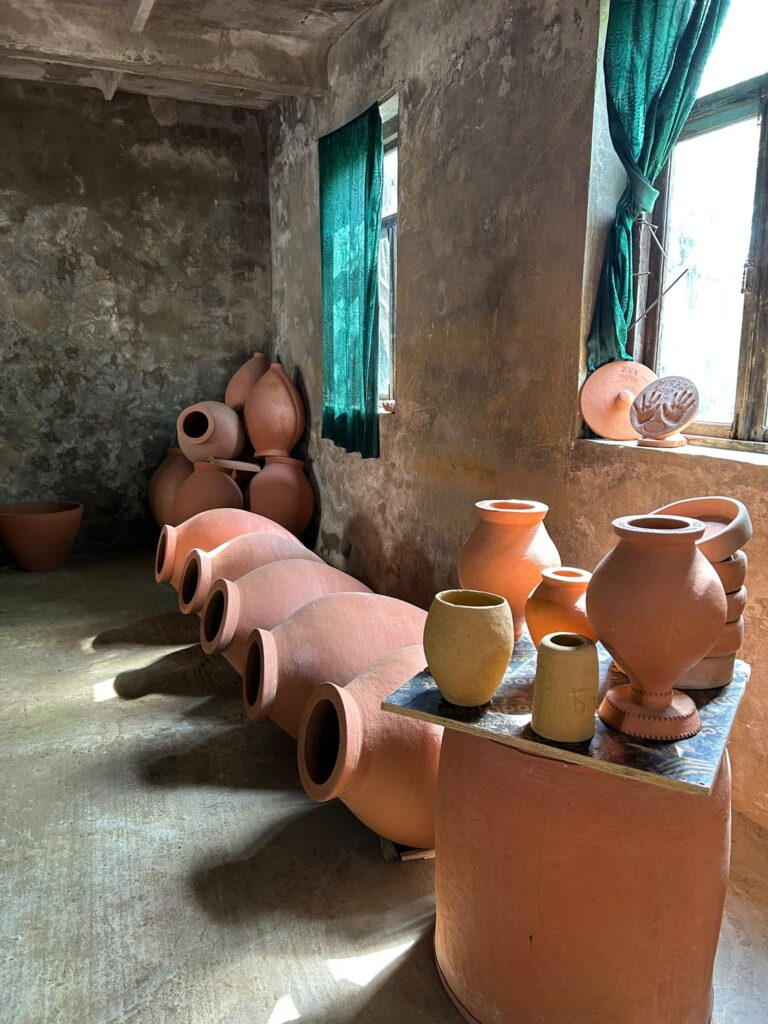
Continuing down the highway towards Kutaisi, we pulled up outside a very unassuming qvevri workshop (qvevri is the Georgian wine making vessel that dates back 8000 years). This workshop belonged to Zaliko Bodjadze, a master qvevri maker who is one of the last of his kind. Though humble in its appearance, wine makers come from far and wide to source his qvevris from the likes of Gravner & Vino di Anna.
Like any good wine the qvevris he produces are so good because of the terroir they’re made from. The mountains behind his workshop produce clay that, when combined with the perfect level of humidity in the air, allows him to construct qvevris that are strong, durable and that have enough porosity to protect the wines during fermentation and ageing–an essential process of making wine in qvevris.
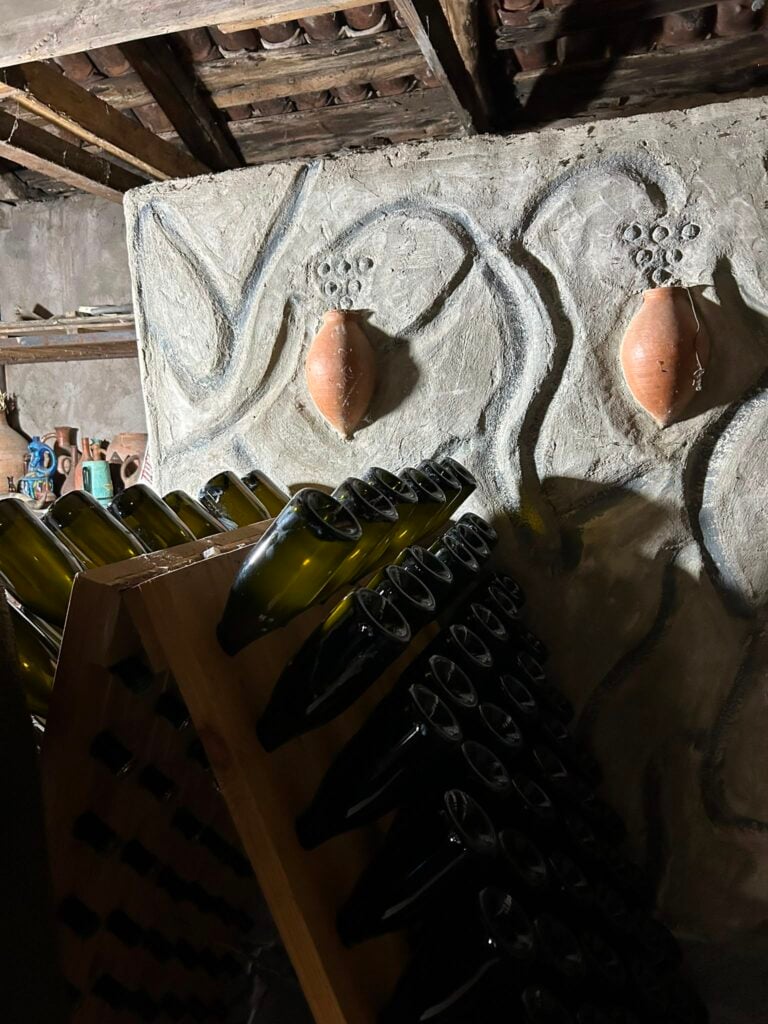
Blown away by what we’d just seen, we moved onto a small village to the South East of Kutaisi to visit Archil Guniava and his daughter Mariam. Archil’s winery at his family home dates back generations but has only recently commercialised his wine in the last decade or so. After tasting a few wines in the courtyard, he took us though to a small building, no larger than your car garage at home, to show us his cellar. Just poking out of the ground lay 6 or 7 qvevris where we tasted through Tsitska & Tsolikauri for the whites and Dzelshavi and Aladasturi for the reds. Mariam also makes a couple of wines herself in the cellar. Most memorable for us was her Aladasturi, which to any keen blind taster would not be forgiven for assuming it was a Poulsard from the Jura!
Having enjoyed a fair few wines across the day, we’d worked up quite the appetite! Luckily for us, only a short walk up onto the terrace lay a true feast–homemade breads, dips, salads, stews and the showstopper: a whole roast suckling pig that was paraded around the table on a makeshift cardboard platter, as this was the only thing big enough to hold it.
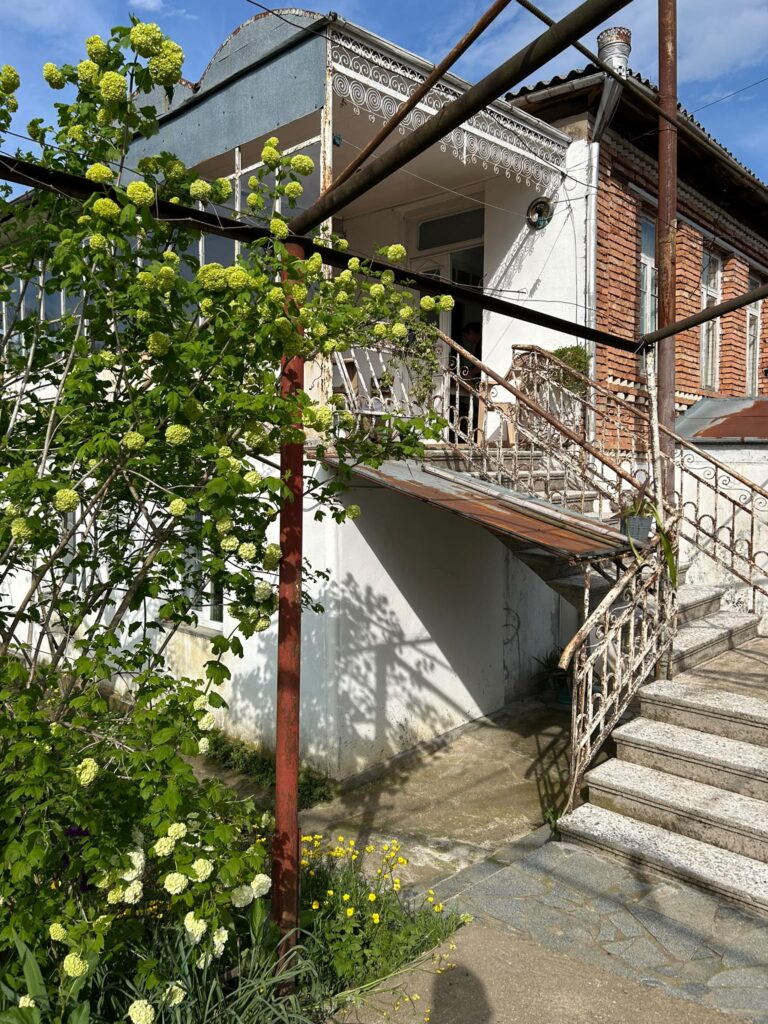
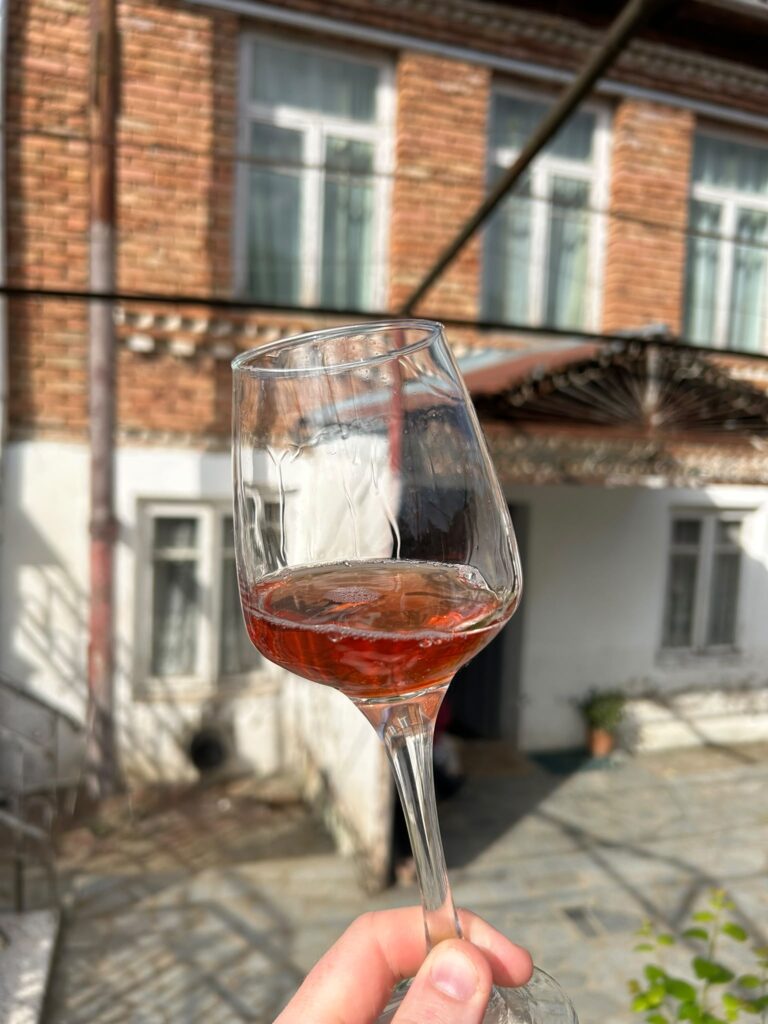
Our last stop took us to one of the pioneers of the region, Ramaz Nikoladze His small 1.5 hectare vineyard grown over clay soils has been farmed biodynamically since 2007. His wines epitomise my original point around the delicate nature of wines from this region . His direct press Tsitska was reminiscent of the greatest Anjou Chenin–savoury, salty, rich, textural and super precise.
This barely even scratches the surface of what we saw and has left us wanting to come back for even more. გაუმარჯოს !!**
**Gaumarjos! Which means ‘cheers!’ in Georgian.
Peter Jones, Head of Wine at Brawn.